
Unlike Anything in DeFi
Zephyr Protocol is a private Proof-of-Work blockchain with a built-in stablecoin and yield layer. ZEPH can be converted into ZSD, a dollar-pegged private stablecoin, or staked into ZYS, yield shares that grow as mining rewards accrue.
The core difference: users can move into stablecoins or yield products without forcing ZEPH back onto the market. Instead, demand routes through the protocol and locks ZEPH into collateral.
- Stablecoin demand mints ZSD.
- Yield demand stakes ZSD into ZYS.
- Bridge demand routes wrapped supply back through native Zephyr collateral.
The result is simple: product demand strengthens the base asset and leaves less liquid ZEPH supply.
All value flows through ZEPH first.
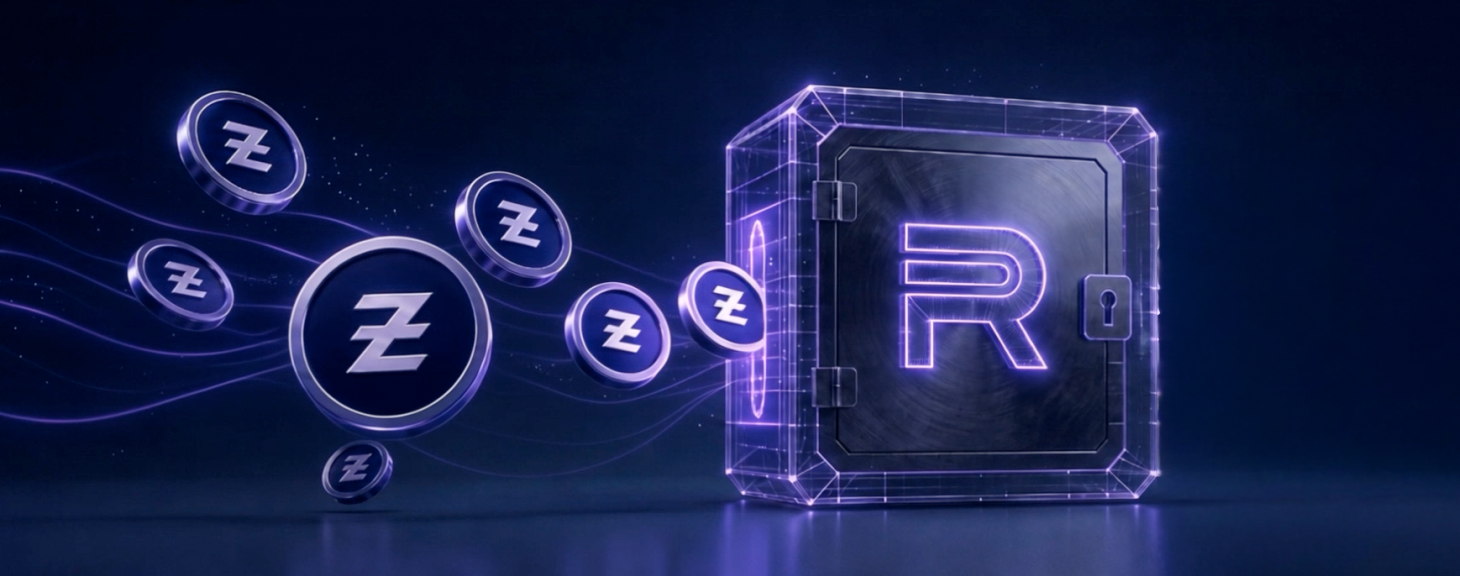
Product demand removes ZEPH from liquid supply,instead of pushing it through an exchange sell.
Most people assume exiting ZEPH to stablecoins means selling on an exchange — which creates sell pressure and pushes price down for other holders.
Zephyr's conversion takes a different path: convert ZEPH into ZSD inside the protocol, where ZEPH is locked as collateral instead of being sold through an order book.
Entry hits the order book. Conversion doesn't. One-directional pressure.
Loop 1 is live on native Zephyr today.Loops 2 and 3 become much more powerful once wrapped assets trade on EVM markets.
ZEPH is the base collateral behind the entire protocol.
Converting it to ZSD locks ZEPH in Reserve as backing — no exchange sale required.
Protocol conversions remove ZEPH from liquid circulation without forcing it onto market order books.
The EVM bridge wraps native ZSD as wZSD — a fully-backed stablecoin on Ethereum.
To a DeFi user, it looks like a standard stablecoin swap.
What they don't see is that every wZSD purchase silently triggers a real ZEPH buy on the backend.
The EVM bridge wraps native ZYS as wZYS — a yield bearing stablecoin on Ethereum.
It looks like a typical non-rebasing yield token from their EVM wallet.
What they don't see is that every wZYS purchase silently raises the APY itself.
On the Record
Key points about the Protocol's history.
Mechanics Matter
Once demand routes through collateral instead of exchange selling, the important question becomes simple: how much liquid ZEPH is left to absorb new demand?
The Supply Shock Math
The squeeze amplifies with every dollar of demand.
Every demand dollar pulls four dollars of base assetinto the Reserve.
Every $1M of stablecoins minted locks ~$4M worth of ZEPH in the Reserve. The collateralization requirement is a built-in supply vacuum.
Over a third of all ZEPH is already removed from circulation. The remaining tradeable supply on exchanges is thin — even moderate demand moves the price significantly.
Small increases in ZSD / ZYS demand move the ZEPH price disproportionately.
The Back-End Minting Path
When Ethereum demand exceeds available wrapped supply, rebalancing routes that demand back into native ZEPH collateral.
A DeFi user can buy wZSD or wZYS on Uniswap without touching ZEPH.
If new wrapped supply is needed, the minting path has to source native backing on Zephyr, which routes demand back through ZEPH collateral.
Arbitrageurs monitor for price dislocations between Ethereum and native Zephyr in real time.
When demand spikes on Ethereum, arbitrageurs execute the rebalancing loop: buy ZEPH on a CEX → lock it in the Reserve to mint native ZSD or ZYS → bridge back to Ethereum as wZSD/wZYS → sell on Uniswap to capture the premium. This pulls liquid ZEPH from exchange order books.
The result: product demand translates into collateral demand for the ZEPH base token.
Ethereum users chase stablecoin utility or yield. The Bridge quietly handles the native-chain collateral route on the back-end.
Ethereum demand routes through native collateral.
Sustainable Yield, Private by Default
The mechanics only matter if the yield source and privacy base can survive real use.
How Is This Yield Sustainable?
For context: USDC and similar transparent stables pay 3–4% APY.ZYS has paid multiples of that since launch.Accrued in real stablecoins, and sustainably sourced from Proof-of-Work block emissions.Most high-APY yield farms burn out. Here's why ZYS doesn't.
Permanent Yield Source
ZEPH is a Proof-of-Work blockchain. As long as blocks are mined, 5% of the reward generates yield. This isn't a promotional rate or VC subsidy — it's hardcoded into the protocol.
Self-Balancing APY
More participation = lower APY per person.
However: more ZEPH demand = higher ZEPH price = block rewards worth more.
The resulting APY settles at a level that still greatly outperforms alternatives.
Yield Strengthens Reserve
For every 1 unit of ZSD yield generated, 7 units of ZEPH is allocated into the Reserve. The system becomes more collateralized as it grows, not less.
Privacy — The Foundation of Zephyr
Transparent ledger stables (USDC, DAI) expose every address and every transfer. Zephyr's codebase is forked directly from Monero — all transactions and balances are private by default.

Battle-tested base
Forked from Monero's well-audited codebase, carrying more than a decade of cryptographic research and adversarial scrutiny into Zephyr's foundation.

No KYC
Use the wallet, convert assets, earn yield, and redeem without identity gates or third-party account approval. Balances and transfers are not broadcasted publicly.
Why This Time Is Different
Post-bridge, the flywheel is anchored by real stablecoin yield demand (wZSD and wZYS in DeFi).
The best performing, sustainable yield engine in DeFi — directly accessible from any Ethereum / EVM wallet.
How To Earn ZYS Yield
Start gaining the best yield in DeFi in a few simple steps.
- 1
Buy ZEPH
Acquire ZEPH on MEXC, XT, CoinEx, or NonKYC. Native blockchain, no Ethereum bridge required to participate.
- 2
Convert to ZSD
Inside the Zephyr Wallet: ZEPH → ZSD locks your collateral in the Protocol Reserve. No exchange sell.
- 3
Stake into ZYS
Stake ZSD into the yield pool. You receive ZYS — gaining value with every single block.
- 4
Realize Gains
5% of every Proof-of-Work block reward accrues to ZYS holders. Redeem for ZSD at anytime. No lock-up periods.
Ready to Earn?
Open the wallet, convert into ZYS, and follow Zephyr channels for updates.